A point of view

Healthcare AI starts with the clinician — not the model.

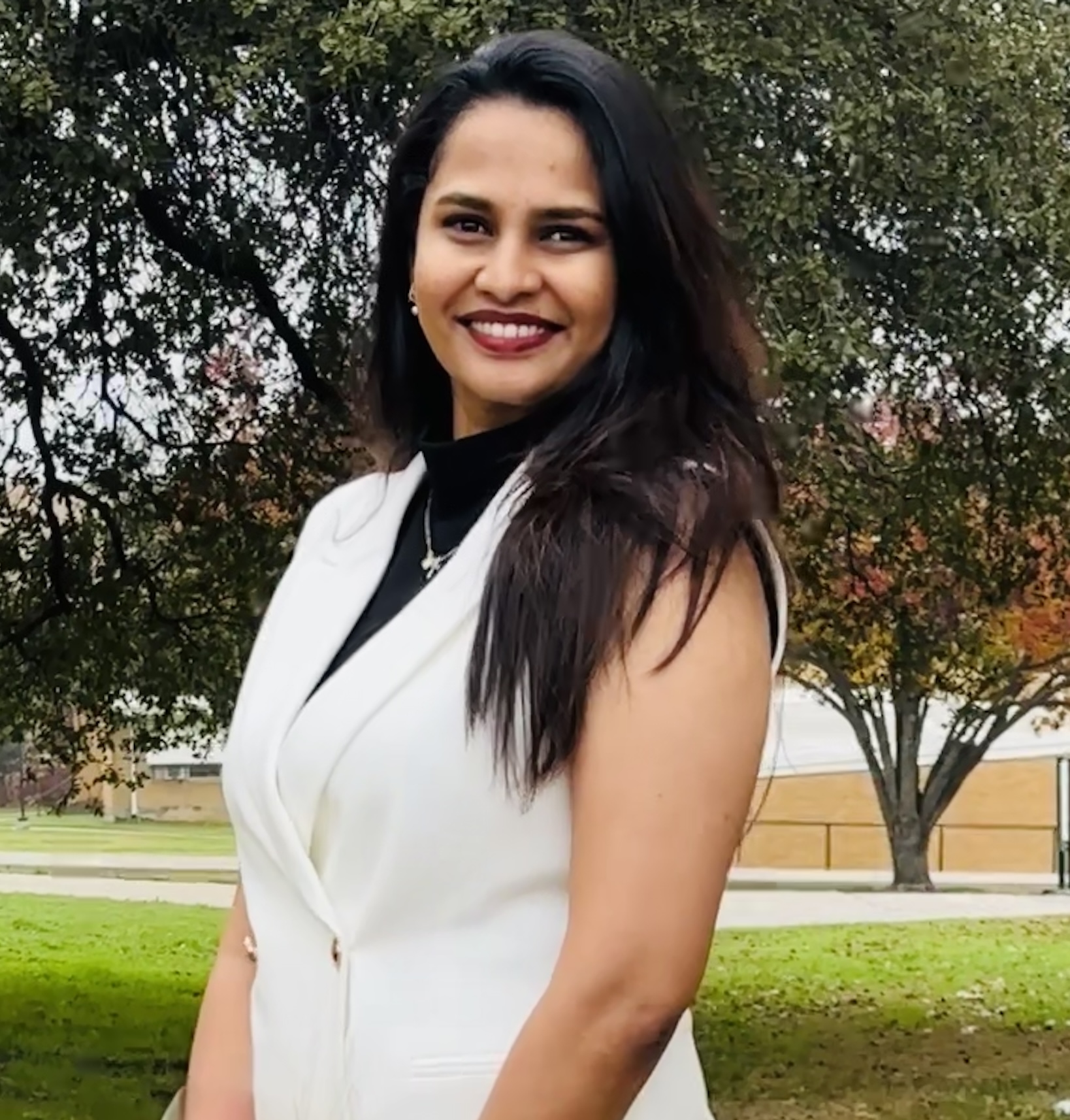
I'm Teija Hebshibah Kohir — call me Tia. Not every AI tool needs to ship to production. The ones that do should make the human-in-the-loop stronger, not redundant.

Teija Hebshibah Kohir

Every framework I build starts from the clinician's seat. Healthcare AI only creates value when it reduces friction — not adds to it. That means automating administrative work and giving time back to care.

The foundation is clinical data. I've spent years building data warehouses, auditing ETL pipelines, and ensuring context accuracy. Without that rigor, AI fails. Change management and governance matter more than algorithm sophistication.

Nine years across healthcare tech: Epic implementations, data engineering at NYU Langone and Sutter Health, AI value strategy at Stanford Health Care. Bachelor's in Computer Science, MBA in Hospital and Healthcare Administration, MS in Health Data Analytics.

— Tia
Experience

From Epic go-lives to AI value frameworks.

9+ Years across the healthcare tech ecosystem
4 AI solutions evaluated for ROI & deployment
8h 2m Financial validation workflow automation
2025 — 2026
Healthcare AI Product & Value Strategy
Stanford Health Care · AI Value, Finance & Business Ops
Built four-pillar AI value assessment framework applied across deployed healthcare AI solutions. Designed cost allocation model for the ChatEHR platform, separating platform vs. automation costs to feed Scale / Maintain / Retire roadmap decisions.
2021 — 2023
Senior BI & Clinical Product Analyst
NYU Langone Health (via Clairvoyant)
Directed end-to-end lifecycle of clinical analytics products including oncology Tableau dashboards. Architected Hadoop data marts, ETL pipelines, and ERDs unifying ADT, pathology, imaging, and surgical workflows for precision medicine and research.
2019 — 2021
Business Intelligence Developer
Sutter Health (via Deloitte Consulting)
Generated SQL workflows powering hospital KPIs — barcode compliance, mental health metrics, oncology dashboards. Optimized reporting accuracy and reduced decision-making time for clinical stakeholders.
2014 — 2019
Consultant (Associate Lead)
CommonSpirit Health (via Deloitte Consulting)
Led Epic system upgrades and go-lives across multiple U.S. sites. Mentored teams on Epic ASAP, ClinDoc, Orders, and Reporting Workbench. Recognized with Spot and Optimistic Awards for technical leadership.
Tools I work with
AI & LLMs
Claude Gemini OpenAI
Cloud & Data Platforms
GCP Azure BigQuery Databricks Databricks Genie Hadoop
Languages
Python SQL / PL-SQL
Coding & Productivity
VSCode Tableau Jira / Agile Collibra
Epic Certifications
Epic ASAP
Epic SmartForms
Epic Cogito
Epic Data Model Clarity
Epic Data Model Clinical
Epic Data Model Caboodle
Credentials & Memberships
Stanford Online Digital Health Product Development
Google Project Management Foundations
Scrum Alliance Certified Scrum Product Owner (CSPO)
Member American College of Healthcare Executives (ACHE)
Member American Medical Informatics Association (AMIA)
Selected Work

Case studies in healthcare AI & analytics.

Projects across the value-realization lifecycle for healthcare AI — from clinical operations and data engineering to financial modeling, predictive analytics, and the evaluation work that informs what should actually ship.

NYU Langone Health · Data Foundation

Building a defensible data foundation for healthcare AI.

Designed and executed comprehensive ETL audits and data validation framework across clinical and operational data warehouses. Identified and resolved data quality gaps in ADT, pathology, imaging, and billing systems that would have caused model drift and clinical decision errors. Established governance protocols for ongoing data lineage tracking and validation checkpoints. The result: a trustworthy data layer that enabled downstream AI models to ship with confidence.

5 Clinical workflows unified
100% Data lineage mapped
AI-ready Data quality baseline
Data Engineering ETL Validation Data Governance Hadoop / SQL Clinical Data
Advance Care Planning · Predictive Modeling

Identifying patients who'd benefit from earlier ACP conversations.

Engineered an end-to-end pipeline in Databricks to surface patients likely to benefit from advance care planning conversations — owning cohort definition, feature engineering, model training, and evaluation. Trained and compared six models — XGBoost, Regression, Random Forest, plus three additional baselines surfaced by Databricks Genie — benchmarked across five clinical performance metrics. Layered a unit-cost analysis (with assumption-based inputs) and token-level monitoring to test production sustainability under realistic inference spend.

6 Models compared
AUC + F1 Key benchmark metrics
Cost-aware Unit & token spend analysis
Databricks Databricks Genie XGBoost Python SQL Clinical Decision Support
Stanford · ChatEHR

Cost allocation model for an enterprise AI platform.

Built a structured cost-separation model for ChatEHR automations — isolating platform vs. automation costs and feeding a Scale / Maintain / Retire classification used in roadmap decisions.

Cost Modeling Portfolio Strategy Finance × AI
NYU Langone Health

Oncology analytics & clinical data products.

Led the end-to-end lifecycle of Tableau-based oncology dashboards. Architected Hadoop data marts, ETL pipelines, and ERDs that unified ADT, pathology, imaging, and surgical workflows for precision medicine.

Tableau Hadoop / SQL Oncology
Academic Project

Breast cancer classification with ML.

Built and benchmarked Random Forest and SVM classifiers on diagnostic imaging data, achieving ~96% accuracy. Companion projects: BRFSS healthy-aging dashboard and a BigQuery analytics pipeline.

Python ML GCP / BigQuery
CommonSpirit Health

Epic implementations across U.S. health systems.

Led Epic upgrades and go-lives across multiple U.S. sites — coaching teams on ASAP, ClinDoc, Orders, and Reporting Workbench. The clinical-workflow grounding that anchors my AI work today.

Epic Change Management Clinical Workflow
Personal Blog & Lab

Notes, findings, and what I'm learning.

Two streams: homegrown research projects from my personal AI lab, and longer-form essays published on Medium. Click a section header to expand or collapse.

AI Lab

Homegrown research and side projects exploring the questions I think matter most for healthcare AI deployment, adoption, and impact measurement — outside the boundary of any single employer.

In Progress · Research + Build

Clinical Summary.

Exploring approaches to clinical note and encounter summarization — what accuracy, clinical relevance, and “good enough for clinician trust” actually mean in practice.

NLP LLMs Clinical Workflows
Research · Deployment Analytics

Work Telemetry — Pre & Post Deployment.

Studying clinician work telemetry before and after AI deployments to quantify what AI actually changes in day-to-day workflow — and what it doesn't. Looking for measurable signal beyond satisfaction surveys.

Telemetry Deployment Analytics Behavioral Impact
Research · Adoption + Burnout

Clinician Alert Fatigue & Adoption.

Researching how alert fatigue patterns interact with clinician adoption of AI tools — and what deployment strategy can do to reduce one without sacrificing the other.

Adoption Alert Fatigue Human Factors
Playbooks from My Learnings

Key learnings and strategic frameworks from nine years deploying healthcare AI across multiple systems and organizations.

Run Right Models on Right Clinical Data

Problem definition drives model selection, not available data. Data quality matters more than algorithm sophistication. Domain experts validate, not just metrics.

Compute vs. Token Relations

Token spend accelerates non-linearly with context expansion. Optimize for cost per clinical value, not raw throughput. Batch processing saves 30-50%. Monthly tracking prevents surprises.

Strategic & Financial Framework Approach

Separate platform from automation costs — they scale differently. Build sensitivity-tested ROI models, not happy-path projections. Change management kills more projects than technology. Use quarterly reviews to scale, maintain, or retire.

Data Analytics & Governance: Foundation for Context Accuracy

Governance precedes analytics — not the reverse. Missing context is riskier than missing data. Audit data dictionaries ruthlessly for hidden gaps. Surface absence, not just presence. Traceability enables detection of model-breaking data degradation.

Medium Articles
Research

Active and exploratory research initiatives.

Building a Research OS for Healthcare AI Gaps

Currently Active

Designing and building a comprehensive research platform to identify and catalog gaps in clinical and healthcare AI deployment across the rapidly evolving landscape. The goal is to surface opportunities where AI can create real clinical value and highlight areas where premature adoption or duplication is happening.

Scope: Market analysis, stakeholder interviews, deployment pattern mapping, gap prioritization

AI and Emotional Intelligence

Paused

IRB-approved research exploring the intersection of AI systems and human emotional intelligence. Examining how AI interactions affect empathy, engagement, and decision-making quality across diverse populations. Currently pending data collection due to unavailable PI from college; building infrastructure to enable future deployment.

Status: IRB approved, awaiting PI alignment
Methodology Ready:
  • Qualtrics survey built (30-question Likert scale)
  • Research protocol and methodology documented
  • Ready for deployment upon PI coordination
Contact

Let's talk about AI in health systems.

Open to senior product, value strategy, and applied AI roles at health systems and health-tech companies. If we share a problem worth solving, send a note.